The highest-ROI exterior upgrades in 2026
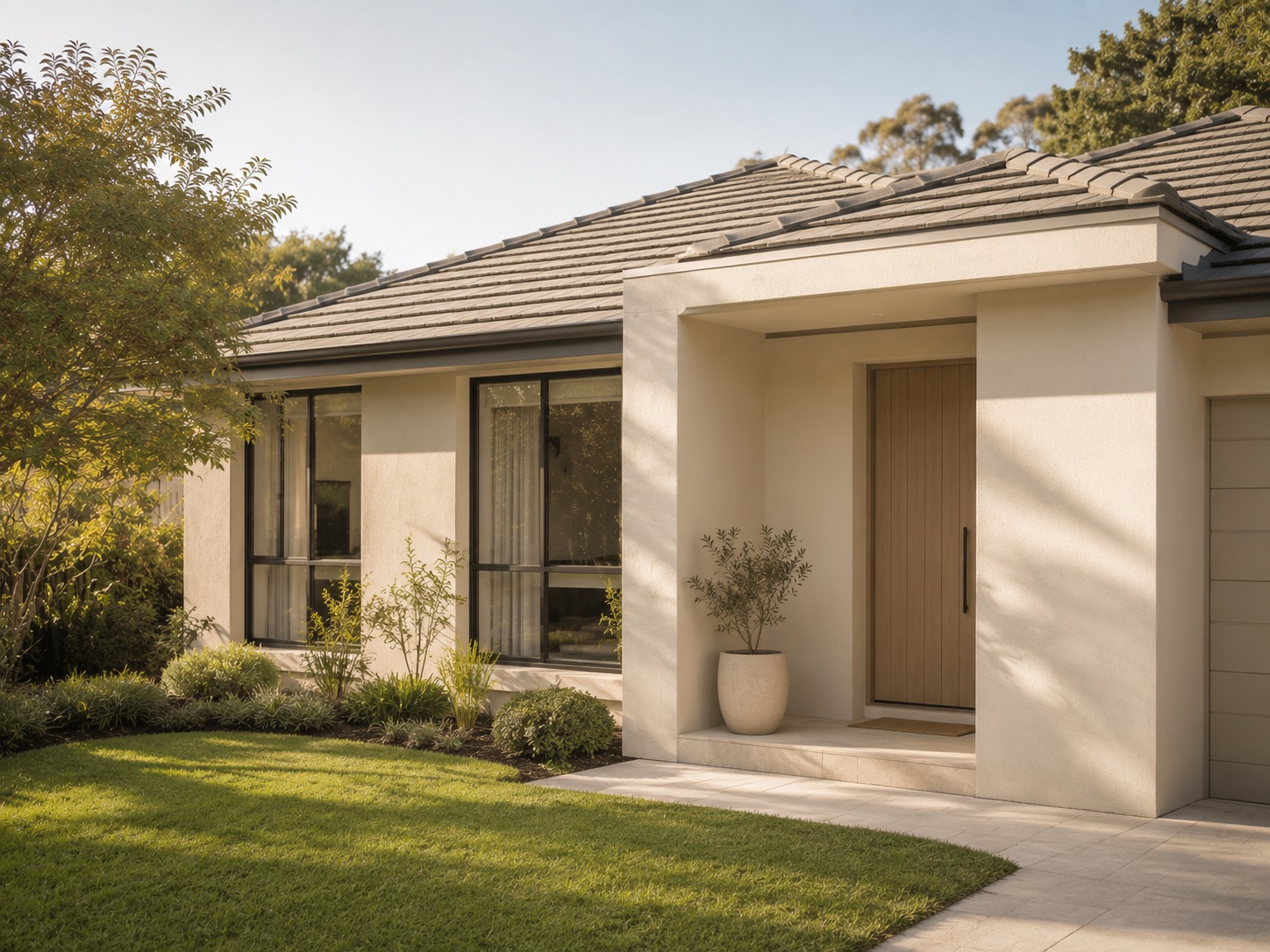
If you only take one thing from renovation ROI data, take this: the outside of your house punches wildly above its weight. In the 2025 Cost vs. Value report — the 38th annual edition, published by Zonda for Remodeling magazine — eight of the ten highest-returning projects were exterior work. Not one of them was a kitchen or a bathroom.
The reason isn't mysterious. Exterior projects are cheap relative to what they change. A garage door occupies a third of most front elevations and costs a fraction of a bathroom remodel. Buyers form a price expectation from the kerb before they ever open the front door, and appraisers grade “condition” and “curb appeal” as explicit line items. You are, in effect, buying a first impression at wholesale and selling it at retail.
The one-line version: spend the first few thousand dollars of any pre-sale budget on the front of the house. It is the only part of a renovation budget that routinely returns more than it costs.
Every exterior project, ranked by what you get back
Below is every exterior project in our data set, ranked by the share of cost typically reflected back in resale value at a midrange finish. Figures are national midrange averages — click any project for regional costs and a full breakdown.
| Exterior project | Typical cost | Recouped |
|---|---|---|
| Garage door replacement | $4,500 | ~160% |
| Entry door replacement (steel) | $2,400 | ~150% |
| Manufactured stone veneer | $11,000 | ~150% |
| Fiber-cement siding replacement | $21,500 | ~114% |
| Curb-appeal landscaping | $8,000 | ~90% |
| Wood deck addition | $17,000 | ~83% |
| Vinyl siding replacement | $19,000 | ~80% |
| Driveway resurfacing | $3,000 | ~80% |
| Composite deck addition | $24,000 | ~68% |
| Vinyl window replacement | $21,000 | ~67% |
| Driveway replacement (concrete) | $7,000 | ~65% |
| Solar panel installation | $25,000 | ~65% |
| Asphalt roof replacement | $30,000 | ~56% |
| Inground pool installation | $45,000 | ~55% |
| Fence installation | $4,500 | ~50% |
| Sunroom addition | $50,000 | ~50% |
Our figures are deliberately more conservative than the headline Cost vs. Value numbers, and we want to be upfront that this is a judgment call, not a formula. That report put garage door replacement at 268% recouped, steel entry doors at 216% and manufactured stone veneer at 208% in 2025 — extraordinary results driven by an unusually tight, condition-sensitive US market. We publish figures well below those peaks so they stay plausible across US, UK, Canadian, Irish, Australian and New Zealand markets and across a full market cycle rather than one hot year — each project's cost page flags this explicitly as an editorial adjustment next to its headline figure. See the source register for the exact figures behind each adjustment.
Tier 1: the projects that genuinely pay for themselves
Garage door replacement
The most reliably profitable renovation in the data, and it has ranked first nationally in every US region for two consecutive reports. A double door is often the single largest visual element on a house, and a dented, sagging or 1990s-beige one drags down the perceived condition of everything around it. The job is also fast — usually a day — with no permits and no living disruption. See garage door replacement costs.
Entry door replacement
A 20-gauge steel entry door is one of the cheapest projects on the entire site and one of the highest returning. It fixes three things at once: appearance, security and draughts. If a full replacement isn't warranted, a repaint in a strong colour plus new furniture is the cheapest curb-appeal move that exists. See entry door costs.
Manufactured stone veneer
Applied to the lower front elevation — typically the bottom third, around the porch or under front windows — stone veneer changes a house's apparent price bracket for a mid-four-figure sum. The trap is overdoing it: full-façade coverage costs several times as much and doesn't multiply the return. See stone veneer costs.
Fiber-cement siding
The one large-ticket exterior job that still clears 100%. It typically outperforms vinyl because buyers and insurers read it as a durability and fire-resistance upgrade rather than a cosmetic one — and because it usually replaces siding that had visibly failed. Compare fiber-cement against vinyl siding.
Tier 2: strong returns, with conditions
Curb-appeal landscaping is the best value in this band — a tidy lawn, defined beds, trimmed trees and a clean path. Note the asymmetry: basiclandscaping returns well, while elaborate hardscaping and water features rarely do. The same logic governs driveways. Resurfacing recoups far more than full replacement, because most of the value is in removing a buyer objection cheaply rather than in the driveway itself.
Decks split along the same line. A wood deck outperforms a composite one at resale purely because it costs materially less to build — buyers price “there is a deck,” not the joist spec. Composite still wins on twenty-year maintenance, so choose it for living, not for selling.
Tier 3: replace-when-needed, not to add value
Roofs and windows sit in the mid-60s. That is not a reason to neglect them — it is a reason to reframe them. A failing roof doesn't cost you the roof price at sale; it costs you the roof price plus a negotiating discount plus a shrunken buyer pool, because many buyers simply won't bid on a house needing immediate structural work. Replace them when the condition demands it, and don't expect a premium for doing so.
The same applies to fencing. A new fence rarely pays for itself, but a rotten one actively costs you at sale. Repair beats replace almost every time.
Where the exterior money runs out
Curb appeal is not a blanket licence to spend outdoors. The bottom of the table is dominated by exterior projects that are genuinely lifestyle purchases: pools (highly climate-dependent, and a net negative in cold markets), sunrooms, and solar, whose returns depend far more on local energy prices and incentives than on aesthetics.
The dividing line is instructive. The winners are all replacements of something visibly worn with something visibly new. The losers are all additions of something the previous owner didn't have. Buyers reliably pay to avoid inheriting a problem; they only sometimes pay for an amenity they may not have chosen themselves.
Price your exterior project
Set your finish level and city, and get an instant cost, resale value and net-cost estimate.
Browse project cost guides →A sensible order of operations
- Fix what's broken first. Anything a buyer's inspector will flag — roof, gutters, rot, drainage — comes before anything cosmetic. Defects get discounted at more than their repair cost.
- Then buy the first impression. Garage door, entry door, house numbers, light fittings, letterbox. Under $6,000 in most markets, and the highest-returning money you will spend.
- Then clean up the frame. Landscaping, driveway resurfacing, a pressure wash, a repainted trim line. Cheap, fast, disproportionately visible.
- Only then consider the big envelope jobs. Siding and windows are worth doing when condition demands it — check first that you aren't overcapitalising relative to your street.
The honest caveat
These are national averages, and no average is your house. Exterior ROI is unusually sensitive to starting condition. Replacing a genuinely dilapidated garage door can beat the headline figure; replacing a perfectly serviceable eight-year-old one returns close to nothing, because there was no visible problem to solve. Before committing, walk to the opposite kerb, photograph your house on your phone, and judge the photo as though it were a listing. Whatever your eye lands on first is where your money should go.
For the full picture across interior and exterior work, see which home improvements add the most value, or the underlying data in the 2026 Renovation ROI Index.
Methodology & sources
Cost figures are national midrange averages compiled from published “Cost vs. Value” remodeling data and adjusted for finish level and region; “recouped” is the share of project cost typically returned as added resale value. Headline US figures cited above come from Zonda's 2025 Cost vs. Value Report (38th annual edition, published with Remodeling magazine), which reported garage door replacement at 267.7% recouped on a $4,672 national average job cost, steel entry door replacement at 216.4%, and manufactured stone veneer at 207.9%. Our own published ROI figures are set more conservatively so they remain usable outside a peak US market. These are planning benchmarks, not appraisals or quotes. Reviewed July 2026. General information, not financial or real-estate advice. See the full source register for every project's exact classification.
Last reviewed: July 2026 · Return on Reno