Best renovations for flipping a house
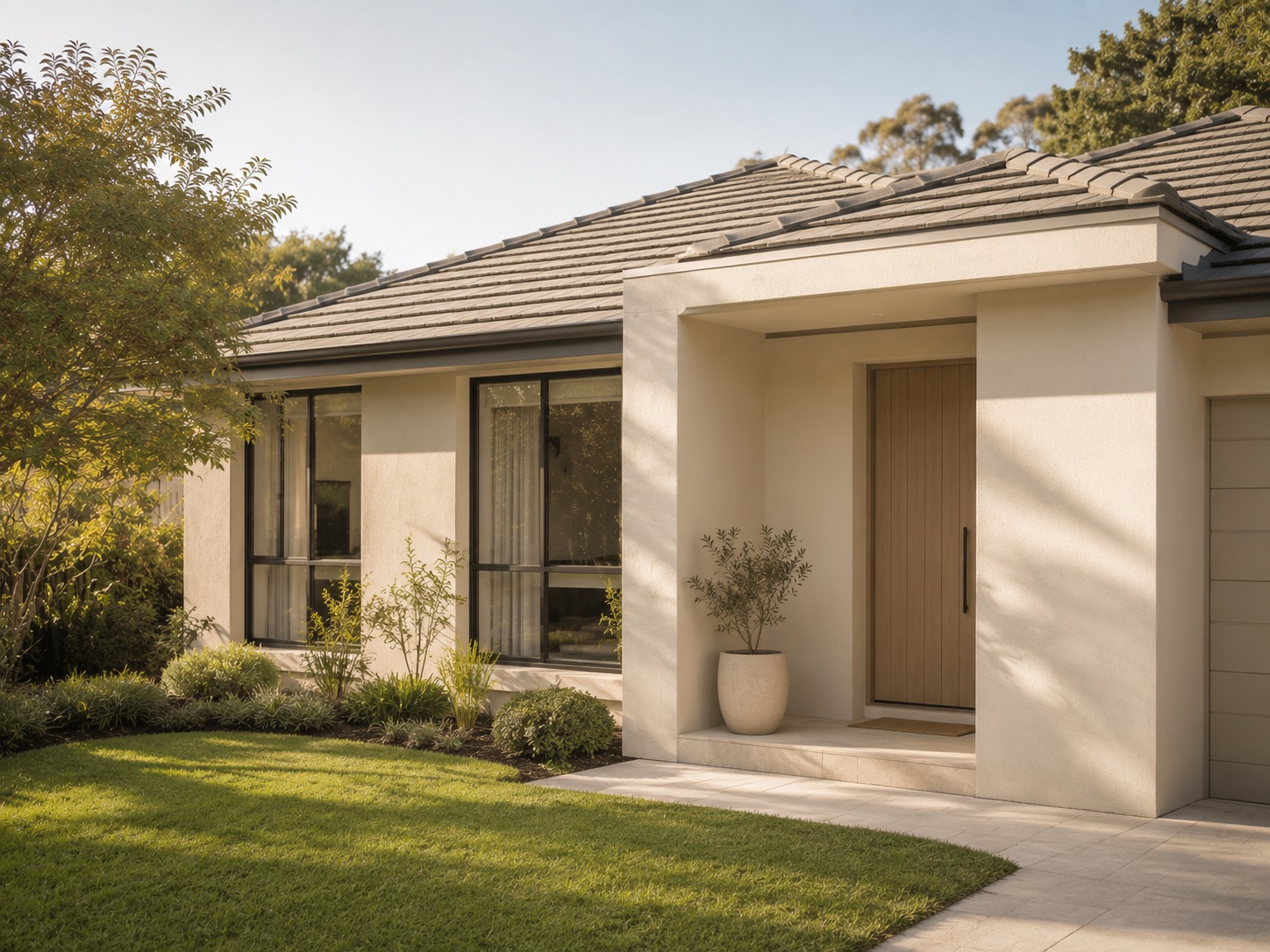
Flipping isn't the same game as renovating your own home. You're not optimising for how much you'll enjoy the upgrade — you're optimising for margin, speed to sell, and the widest possible buyer pool. That changes which projects are actually “best.”
The flip filter: a good flip renovation scores well on three things at once — high ROI, broad appeal (not a niche taste), and a short timeline. A project that's high-ROI but takes four months of permits fails the flip test just as badly as a low-ROI luxury upgrade.
The core flip package
These consistently show up in profitable flips because they hit all three filters:
- Minor kitchen remodel — cabinet refacing, new counters and hardware, one or two appliances. About 85% recouped, and it's the room buyers judge a listing on first.
- Bathroom remodel — a clean, neutral bathroom removes a near-universal buyer objection. About 74% recouped.
- Whole-home repaint in warm neutrals — cheap, fast, and it makes every other room photograph better. Around 80% recouped.
- Refinishing existing hardwood — often recoups its full cost, and flooring is one of the first things buyers notice walking in.
- Garage door and entry door replacement — the two highest-ROI projects in the whole index, and both close in a day or two.
- Curb-appeal landscaping — shapes every buyer's first impression before they've stepped inside, and it's quick to execute.
Good, but check your comps first
- Vinyl siding or stone veneer — strong ROI and very photogenic, but only worth it if the existing exterior is genuinely dated or damaged.
- Driveway resurfacing — cheap and high-leverage if the base is sound; skip straight to full replacement if it isn't.
- Finishing a basement — adds real square footage at a fraction of new-build cost, but it's a longer job; only pencil it in if your hold period allows.
Avoid on a flip
- Major kitchen remodels and room additions — long timelines, permit risk, and only ~50% recouped. That's margin you're unlikely to get back.
- An inground pool — slow to build, narrows your buyer pool to people who want pool maintenance, and typically returns only about half its cost. See does a pool add value.
- Anything highly personal to your own taste — bold colours, a home theatre, a wine cellar. See home improvements that don't add value for the full list.
How flip priorities differ from homeowner renovations
The biggest mental shift for a first-time flipper is realising that your personal taste is irrelevant. When you renovate your own home, you pick what you love and live with it for years. When you flip, every decision is filtered through two questions: will the broadest possible pool of buyers approve of this, and can it be done fast enough to keep holding costs from eating the margin?
Speed matters because every month you hold a flip property costs money — mortgage interest, insurance, utilities, property taxes, and the opportunity cost of your capital. A project that returns 85% ROI but takes four months is often worse than one that returns 75% but closes in two weeks. This is why flippers favour repainting (a week) and garage door swaps (a day) over bathroom additions (six to eight weeks with permits).
Cost-efficiency is the second filter. Flippers who survive do not aim for the nicest version of anything — they aim for the “buyer-ready” standard. That means finishes that look clean, modern, and neutral without crossing into premium territory. Stock cabinetry with soft-close hardware, quartz-look laminate countertops, brushed nickel fixtures, LVP flooring. These choices photograph well, satisfy most buyers, and cost a fraction of their custom equivalents.
The “buyer-ready” standard, defined
Buyer-ready means a home where a qualified buyer can move in without any visible project to tackle. It does not mean luxury. It means:
- Fresh, neutral paint throughout — no scuffs, patches, or colour that divides opinion.
- Clean, consistent flooring — no transitions between carpet, tile, and vinyl that signal piecemeal updates over the years.
- A kitchen with functioning, matching appliances and surfaces that do not look dated.
- Bathrooms with clean grout, no mould, no cracked tiles, and fixtures that match.
- An exterior that photographs well — no peeling paint, no overgrown landscaping, no cracked driveway.
Hitting buyer-ready across the whole house is cheaper than pushing any single room to premium. Buyers walk through with a mental checklist, and one ugly room undoes the effect of three beautiful ones. Spread the budget evenly.
Common flip renovation mistakes
Experienced flippers see the same errors repeated by newcomers:
- Over-finishing. Installing $15,000 in custom tile and waterfall-edge quartz in a house that will sell for $280,000 on a street of $260,000 homes. The comps cannot support the spend — see how to avoid overcapitalising. Stick to finishes that match or slightly exceed the neighbourhood norm, never finishes that would look at home in a house twice the price.
- Under-finishing. Cutting so many corners that the result looks like a flip. Buyers have learned to spot cheap paint over dirty walls, new hardware on cabinets that needed refacing, and fresh caulk over cracked tile. Under-finishing generates low offers, longer time on market, and inspection renegotiations that eat the margin you were trying to protect.
- Ignoring curb appeal. The interior gets all the budget and the exterior gets nothing. This is backwards for a flip — the listing photo is the exterior, and the buyer's first impression happens at the kerb. Budget at least 10–15% of your rehab spend on curb appeal, the front door, and the garage door. These are the highest-ROI items in the entire index and they close fast.
- Skipping the pre-purchase inspection. Buying a flip property without a thorough inspection leads to surprise plumbing, electrical, or structural costs that blow the budget. A $500 inspection before you close on the purchase can save $15,000 in unplanned scope.
Don't out-spec the street
The single biggest flip mistake isn't picking a bad project — it's picking the right project at too high a finish level for the neighbourhood. A luxury kitchen on a starter-home street can't be supported by the comps, no matter how well it's built. See how to avoid overcapitalising before you finalise your scope of work.
Underwrite the deal before you buy
Test purchase price, rehab spend, resale value and margin — before capital goes in.
See the Deal Analyzer →Methodology: ROI figures reflect national midrange “Cost vs. Value” data adjusted for finish, scope and region. Flip margins depend heavily on purchase price, holding costs and local buyer demand — always underwrite the full deal, not just the renovation. Reviewed by Darren Newland, July 2026. General information, not financial or investment advice. See the full source register for every project's exact classification.
Last reviewed: July 2026 · Return on Reno